
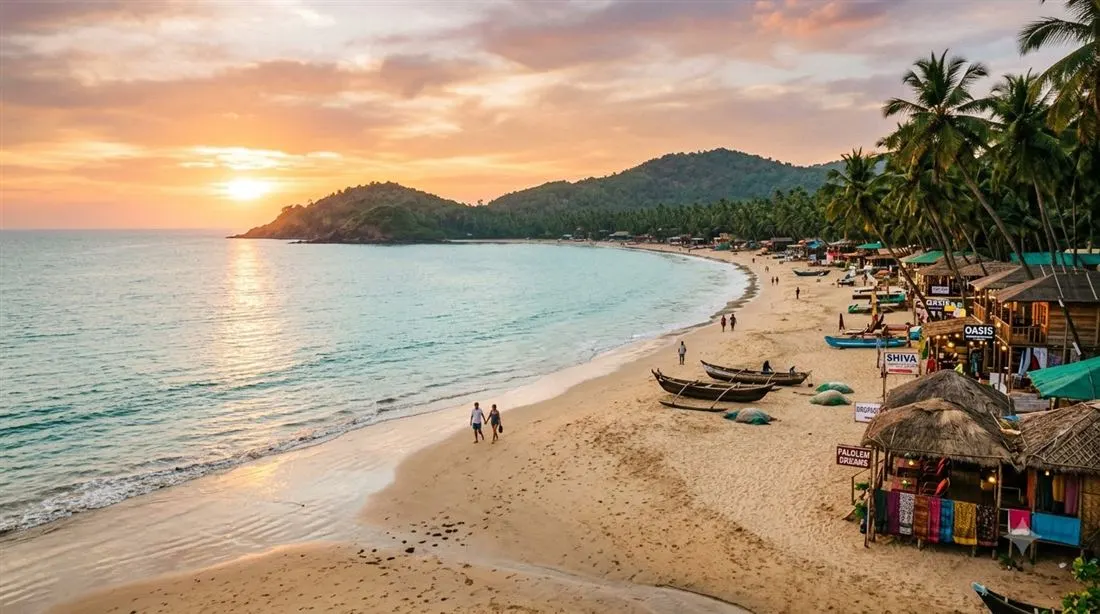
West India
Goa
Two coasts, one unhurried state of mind.
More than beaches — Portuguese-era lanes in Fontainhas, spice farms, river cruises and susegad, the Goan art of unhurried living. North Goa buzzes; South Goa breathes.
Where to go in Goa
- South Goa
- Palolem, Agonda and Cavelossim — quieter beaches, calmer water, slower days.
- North Goa
- Baga, Anjuna and Vagator — markets, nightlife and the busiest stretch of coast.
- Panjim & Fontainhas
- The Latin Quarter’s painted houses and narrow lanes, best explored on foot.
- Old Goa
- UNESCO-listed churches including the Basilica of Bom Jesus.
- Spice farms & Dudhsagar
- Inland plantations and a tall waterfall on the Goa–Karnataka border, at its fullest just after monsoon.
- Divar & Chorão islands
- River islands with old villages and birdlife, minutes from Panjim yet largely untouched.
How to reach Goa
By flight
Two airports — Dabolim and Mopa — with direct flights from most metros.
By train
The Konkan Railway from Mumbai is one of India's most scenic rides.
By road
NH66 from Mumbai or Bengaluru, best broken with a coastal halt.
Travelling from Mumbai? We book the connecting flights or trains as part of your itinerary, so the arrival lines up with your first day on the ground.
Best time to visit Goa
| Season | What to expect |
|---|---|
| November – February | Peak season. Dry, warm and comfortable; December is the busiest and priciest. |
| March – May | Hot and humid, but quieter and better value. |
| June – September | Monsoon. Dramatically green and very atmospheric, but the sea is rough and many shacks close. |
What to eat in Goa
Goan food is a genuine hybrid — Konkani ingredients with Portuguese technique. Expect coconut, kokum and vinegar. Vindaloo in Goa bears little resemblance to the British version, and the Hindu Saraswat and Catholic kitchens are worth treating as two different cuisines.
- Fish Curry Rice
- Prawn Balchão
- Pork Vindaloo
- Bebinca
Travel tips for Goa
Choose your coast: south for calm, north for nightlife. Shoulder months (October, March) mean fewer crowds and better rates. Rent a scooter only with a valid licence and helmet.
A few things worth settling before you fly: carry photo ID for every traveller (and passports if anyone is a foreign national), keep some cash on hand for smaller towns where card acceptance is patchy, and check that your phone plan covers data where you are going. If anyone in the group has mobility needs, dietary requirements or a medical condition, tell us at the planning stage rather than on arrival — it changes which stays and which routes we recommend.
Who a Goa trip suits
We plan Goa for families travelling together, couples, solo travellers and corporate groups, and the same destination looks quite different for each. A multi-generational family trip is built around shorter travel days, lifts and accessible rooms where they exist, and food everyone can eat. A couple's trip can afford to be more adventurous with routes and stays. A corporate group needs reliable connectivity and predictable timings above all else. When you tell us who is coming, that answer shapes almost every other decision in the itinerary.
How we plan your Goa trip
- You tell us the idea. One WhatsApp message with a rough sense of when, who and how long is enough to start.
- We draft the itinerary. A day-by-day plan built around your budget and pace, with a reason behind each choice of route and stay.
- We refine it together. Swap a town, slow a day down, add a splurge. We revise until the plan reads like your trip, then book everything.
- You travel, we stay reachable. While you are away we remain one message away for changes, hiccups or a dinner recommendation.
Sample itinerary
Every Goa itinerary we build starts from a blank page, so the shape of your trip depends on your dates, pace and who is travelling. Tell us roughly when you want to go and we will send a day-by-day plan for you to react to.
Goa travel FAQs
Palolem and Agonda in the south — shallow, calm and quiet.
June–September is lush and moody; great value, but the sea is rough for swimming.
South for calm, families and quiet beaches; north for nightlife, markets and variety. Splitting a longer trip between both works well.
For atmosphere and value, yes. For swimming and beach shacks, no — the sea gets genuinely dangerous and lifeguard flags should be taken seriously.
It is the local way to get around, but only with a valid licence and helmet. Taxis and app-based cabs are readily available if you would rather not ride.
Planning a trip to Goa?
Tell us your dates and who is travelling. We will design the days around you and stay reachable while you are away.
Plan my Goa trip