
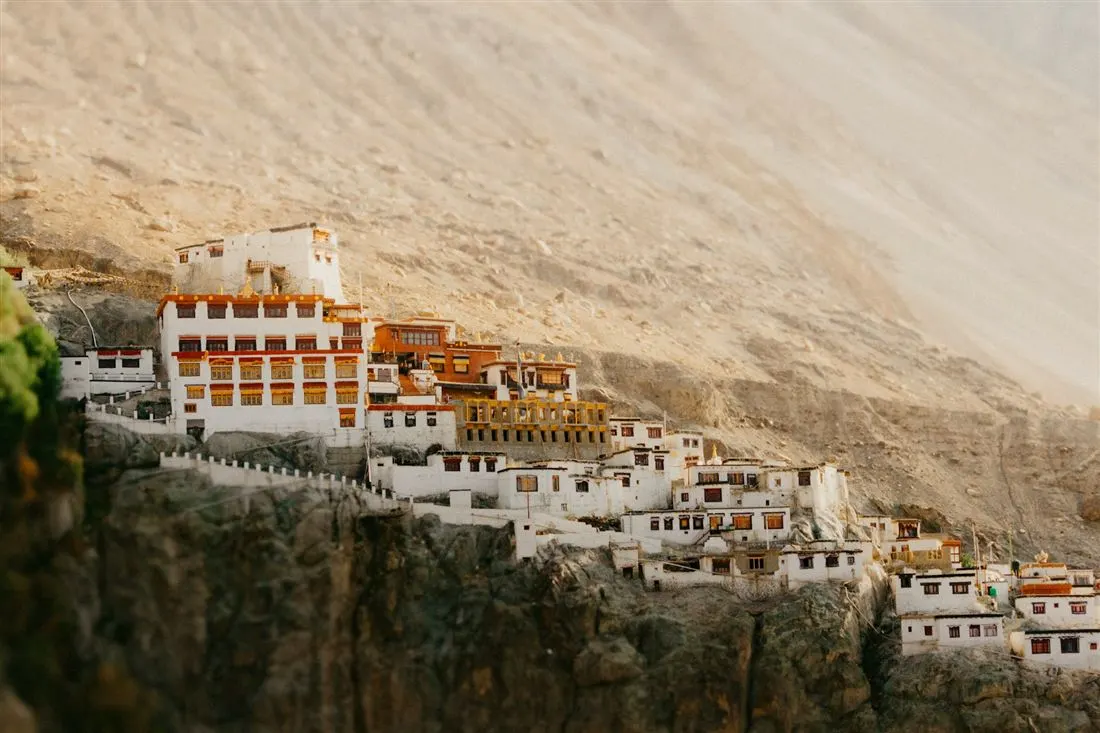
Union Territory
Ladakh
High passes, prayer flags and impossible blue.
A high-altitude desert of prayer flags and impossible blue skies — ancient monasteries at Thiksey and Hemis, the surreal colours of Pangong Tso, and the dunes of Nubra Valley.
Where to go in Ladakh
- Leh
- The regional hub, and where every itinerary begins with two days of acclimatisation.
- Pangong Tso
- A high-altitude lake that shifts colour through the day, straddling the India–China border.
- Nubra Valley
- Reached over Khardung La — sand dunes, double-humped camels and Diskit Monastery.
- Thiksey & Hemis
- Major working monasteries; Thiksey’s morning prayers are worth the early start.
- Zanskar & Chadar
- Remote valleys for experienced travellers, with a very short seasonal window.
- Tso Moriri
- A quieter, higher lake for those with time and good acclimatisation.
How to reach Ladakh
By flight
Daily flights to Leh from Delhi — the practical way in.
By road
The Manali–Leh and Srinagar–Leh highways open roughly June to October; both are epic drives.
By train
No rail link — the nearest railheads are Jammu and Chandigarh.
Travelling from Mumbai? We book the connecting flights or trains as part of your itinerary, so the arrival lines up with your first day on the ground.
Best time to visit Ladakh
| Season | What to expect |
|---|---|
| June – September | The practical season. Roads are open, days are bright, nights are cold. |
| May & October | Shoulder months. Fewer people, but passes can close at short notice. |
| November – April | Deep winter. Most road access closes; travel is by air and limited to specific itineraries. |
What to eat in Ladakh
Ladakhi food is Tibetan-influenced and built for altitude and cold — warming, high-calorie and simple. Butter tea (Po Cha) is an acquired taste but genuinely helps with hydration and acclimatisation.
- Thukpa
- Momos
- Skyu
- Butter Tea (Po Cha)
Travel tips for Ladakh
Acclimatise in Leh for 48 hours before heading higher. Carry cash — ATMs are scarce beyond Leh. Inner Line Permits are needed for Nubra and Pangong; we arrange them for you.
A few things worth settling before you fly: carry photo ID for every traveller (and passports if anyone is a foreign national), keep some cash on hand for smaller towns where card acceptance is patchy, and check that your phone plan covers data where you are going. If anyone in the group has mobility needs, dietary requirements or a medical condition, tell us at the planning stage rather than on arrival — it changes which stays and which routes we recommend.
Who a Ladakh trip suits
We plan Ladakh for families travelling together, couples, solo travellers and corporate groups, and the same destination looks quite different for each. A multi-generational family trip is built around shorter travel days, lifts and accessible rooms where they exist, and food everyone can eat. A couple's trip can afford to be more adventurous with routes and stays. A corporate group needs reliable connectivity and predictable timings above all else. When you tell us who is coming, that answer shapes almost every other decision in the itinerary.
How we plan your Ladakh trip
- You tell us the idea. One WhatsApp message with a rough sense of when, who and how long is enough to start.
- We draft the itinerary. A day-by-day plan built around your budget and pace, with a reason behind each choice of route and stay.
- We refine it together. Swap a town, slow a day down, add a splurge. We revise until the plan reads like your trip, then book everything.
- You travel, we stay reachable. While you are away we remain one message away for changes, hiccups or a dinner recommendation.
Sample itinerary
Every Ladakh itinerary we build starts from a blank page, so the shape of your trip depends on your dates, pace and who is travelling. Tell us roughly when you want to go and we will send a day-by-day plan for you to react to.
Ladakh travel FAQs
Most people feel it mildly on day one. Rest, hydrate, avoid alcohol, and keep the first two days gentle — we build this into every itinerary.
Typically late May/June to early October, weather depending.
Anyone with significant heart or lung conditions, or uncontrolled hypertension, should get medical clearance first. Altitude affects fitness levels unpredictably — being fit is not protection.
Genuinely restful. No sightseeing above Leh, no exertion, plenty of fluids and no alcohol. Rushing this is the single most common reason trips go wrong.
Postpaid Indian SIMs work in Leh; prepaid connections generally do not. Coverage beyond Leh is patchy to non-existent, so plan to be offline in Nubra and at Pangong.
Planning a trip to Ladakh?
Tell us your dates and who is travelling. We will design the days around you and stay reachable while you are away.
Plan my Ladakh trip