
East India
Sikkim
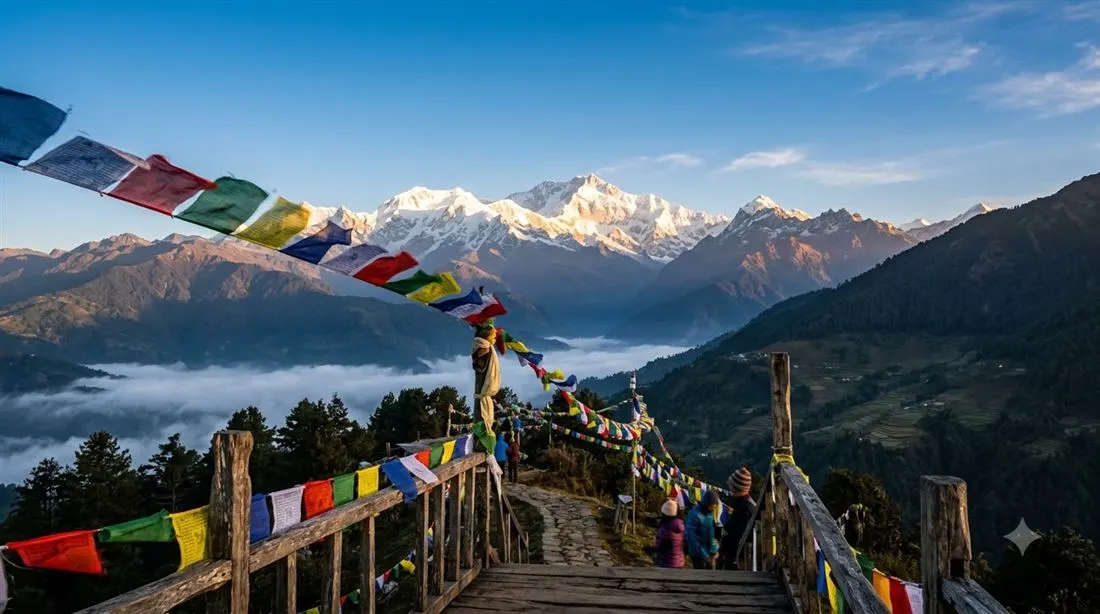
Monasteries, rhododendrons and Kanchenjunga on the horizon.
A tiny Himalayan state of monasteries and rhododendrons — Gangtok's easy charm, the sacred Tsomgo Lake, Nathula Pass, and Kanchenjunga filling the horizon at Pelling.
Where to go in Sikkim
- Gangtok
- A relaxed hill capital with MG Marg, monasteries and easy day trips.
- Tsomgo Lake & Nathula
- A sacred glacial lake and the historic pass on the old Silk Route; both need permits.
- Pelling
- The classic Kanchenjunga viewpoint, with Pemayangtse Monastery and the Rabdentse ruins nearby.
- North Sikkim
- Lachung, Lachen and the Yumthang Valley — spectacular, remote, and permit-controlled.
- Rumtek Monastery
- One of the most significant Tibetan Buddhist monasteries outside Tibet.
- Ravangla & Namchi
- Quieter southern Sikkim, with the Buddha Park and wide valley views.
How to reach Sikkim
By flight
Bagdogra (with a mountain drive up) or the small Pakyong airport near Gangtok.
By train
New Jalpaiguri (NJP), then a 4–5 hour drive.
By road
Winding but beautiful roads from Siliguri and Darjeeling.
Travelling from Mumbai? We book the connecting flights or trains as part of your itinerary, so the arrival lines up with your first day on the ground.
Best time to visit Sikkim
| Season | What to expect |
|---|---|
| March – May | Rhododendrons and orchids in bloom; pleasant and popular. |
| October – December | The clearest skies of the year and the most reliable Kanchenjunga views. |
| June – September | Monsoon. Heavy rain and a real risk of landslides on mountain roads. |
| January – February | Cold and quiet, with snow in the higher reaches and some routes closed. |
What to eat in Sikkim
Sikkimese food is Nepali, Bhutia and Lepcha in influence — momos and thukpa everywhere, alongside gundruk (fermented leafy greens) and sel roti. Millet-based tongba is the traditional local drink.
- Momos
- Thukpa
- Gundruk
- Sel Roti
Travel tips for Sikkim
Permits are needed for Tsomgo Lake and Nathula — we arrange them with your ID in advance. Roads are winding, so carry motion-sickness tablets, and always keep photo ID handy.
A few things worth settling before you fly: carry photo ID for every traveller (and passports if anyone is a foreign national), keep some cash on hand for smaller towns where card acceptance is patchy, and check that your phone plan covers data where you are going. If anyone in the group has mobility needs, dietary requirements or a medical condition, tell us at the planning stage rather than on arrival — it changes which stays and which routes we recommend.
Who a Sikkim trip suits
We plan Sikkim for families travelling together, couples, solo travellers and corporate groups, and the same destination looks quite different for each. A multi-generational family trip is built around shorter travel days, lifts and accessible rooms where they exist, and food everyone can eat. A couple's trip can afford to be more adventurous with routes and stays. A corporate group needs reliable connectivity and predictable timings above all else. When you tell us who is coming, that answer shapes almost every other decision in the itinerary.
How we plan your Sikkim trip
- You tell us the idea. One WhatsApp message with a rough sense of when, who and how long is enough to start.
- We draft the itinerary. A day-by-day plan built around your budget and pace, with a reason behind each choice of route and stay.
- We refine it together. Swap a town, slow a day down, add a splurge. We revise until the plan reads like your trip, then book everything.
- You travel, we stay reachable. While you are away we remain one message away for changes, hiccups or a dinner recommendation.
Sample itinerary
Every Sikkim itinerary we build starts from a blank page, so the shape of your trip depends on your dates, pace and who is travelling. Tell us roughly when you want to go and we will send a day-by-day plan for you to react to.
Sikkim travel FAQs
Only for protected areas like Nathula and Tsomgo; foreign nationals need permits for the state itself — all handled by us.
Pelling and the Tashi viewpoint on clear October–December mornings.
Indian nationals need permits for protected areas such as Nathula, Tsomgo and North Sikkim. Foreign nationals additionally need an Inner Line Permit for the state. We arrange these with your ID documents in advance.
Clear mornings between October and December, from Pelling or the Tashi viewpoint near Gangtok. Clouds usually build through the day, so early is everything.
Gangtok, Pelling and the southern circuit are comfortable. North Sikkim involves long drives at altitude on rough roads and needs more careful thought.
Planning a trip to Sikkim?
Tell us your dates and who is travelling. We will design the days around you and stay reachable while you are away.
Plan my Sikkim trip